Teaching Abroad Direct
British school dinner recipes have changed dramatically over the last 80 years. From wartime Spam fritters in the 1940s, to turkey twizzlers in the 80s and healthier menus in the 2000s. British school dinners tell the story of changing tastes, nutrition standards and culture at the time. The topic of school dinners has been a hotly debated subject in recent times, ever since Jamie Oliver brought the idea of less processed meals to our television screens in the early 2000s – fighting those now infamous (and banned) turkey twizzlers, rectangle pizzas and mountains of chips. Although many parents fought the changes, it’s undeniable that these efforts changed school dinners for the better.
We've embarked on researching and recreating some of the most typical British school dinners from each decade to see just how much they’ve changed. This blog looks at the history of school dinners in the UK, together with photos and a summary of what each decade favoured.
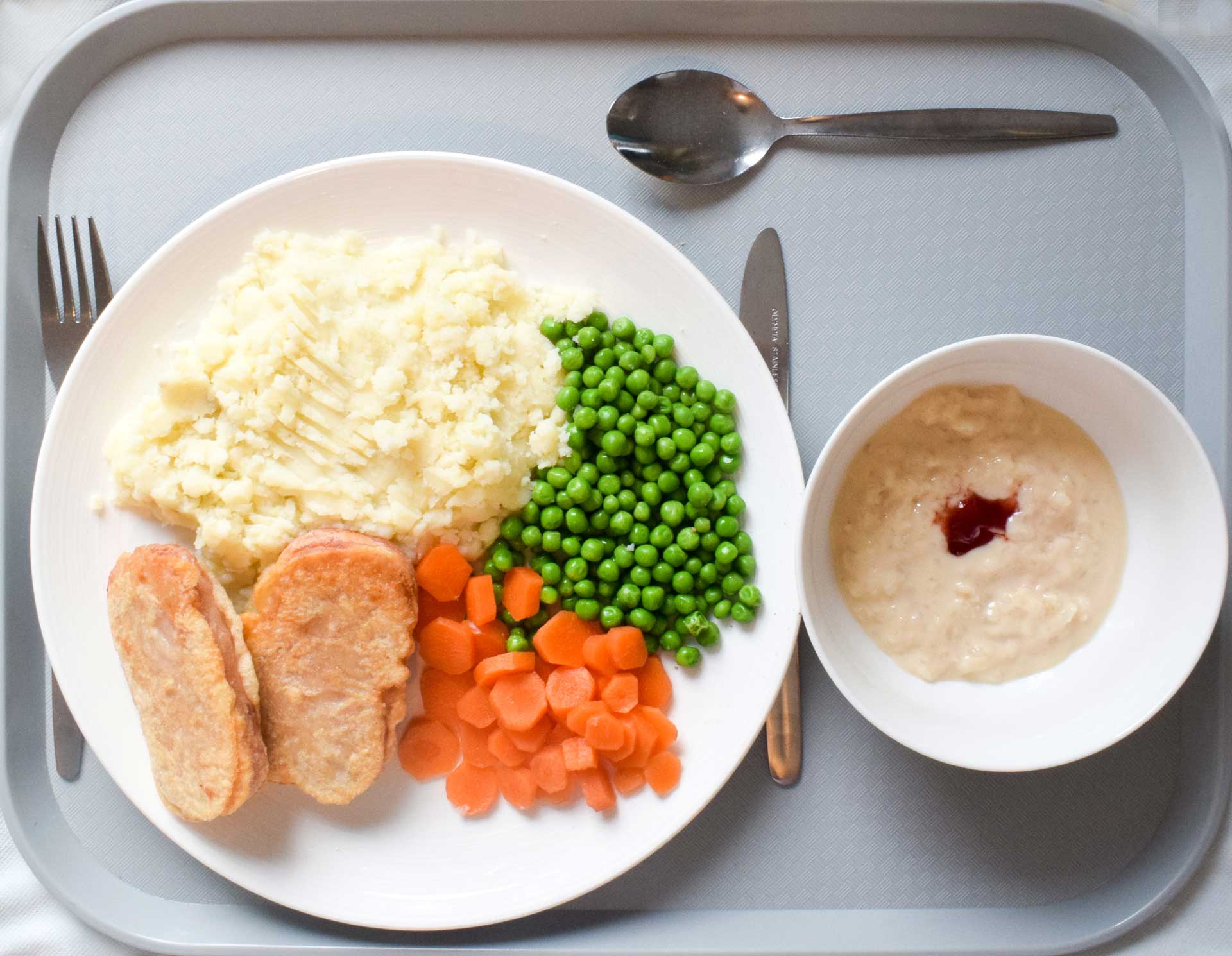
School dinners in the 1940s were shaped heavily by food shortages and wartime rations. Meals were based on what was available at the time. In this period, school meals became increasingly important, as many children relied on them for a hot, nutritious meal each day. Because of rationing, variety was rather scarce. School dinners focused on simple, filling dishes made from ingredients that were affordable and widely available, and local authorities were forced to provide them. Although menus would seem basic by today’s standards, these meals played an important role in supporting children’s health during very difficult years.
Government policies and wartime food controls had a huge influence on school dinners of the 1940s. School kitchens worked within strict ingredient availability, prioritising calories and nutrition over variety. Meals often included vegetables, potatoes and preserved or canned meat because these were easier to source consistently. The jam roly-poly also made its way onto the menu. As rationing came to an end, meals would include things like fish and chips and corned beef.
Main meal
Dessert
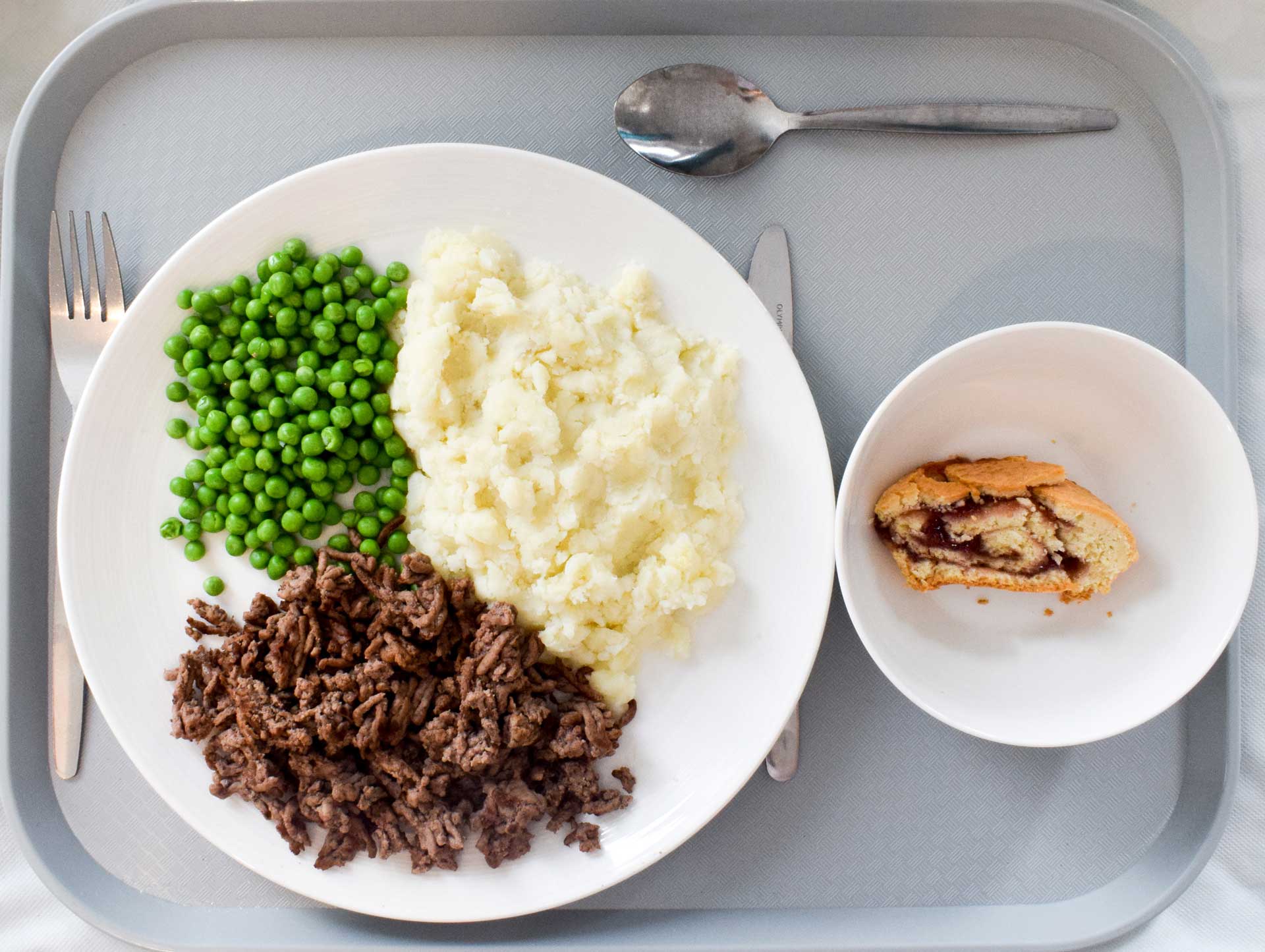
After the rations of the 1940s, school dinners in the 1950s were shaped by wartime rationing, the post-war welfare state and the ambitions of the 1944 Education Act, which established free or subsidised school meals for many children. Many families were still dealing with food shortages and limited incomes in the early part of the decade. The menu contained dishes such as beef and carrots or peas with mashed potatoes and gravy, or a hot pot. Simple cooking dominated, with each meal comprising of some kind of meat, potatoes and vegetables. Sometimes vegetables were seasonal, at other times they were tinned. Vegetables were also often boiled to death, with many children from this area remembering a soggy mush on their plates!
Summer school dinners may have been something like ham, boiled potatoes and salad (simple tomato and cucumber slices). Kids were often monitored by overly attentive school staff who expected them to eat everything on their plate, even after the food had gone cold.
Puddings were often served with hot custard, which was typically lumpy and made from custard powder mixed with milk. Suet puddings were popular, like jam roly poly and spotted dick. Apple crumble, prunes and custard and rice pudding were other favourites.
Main meal
Dessert
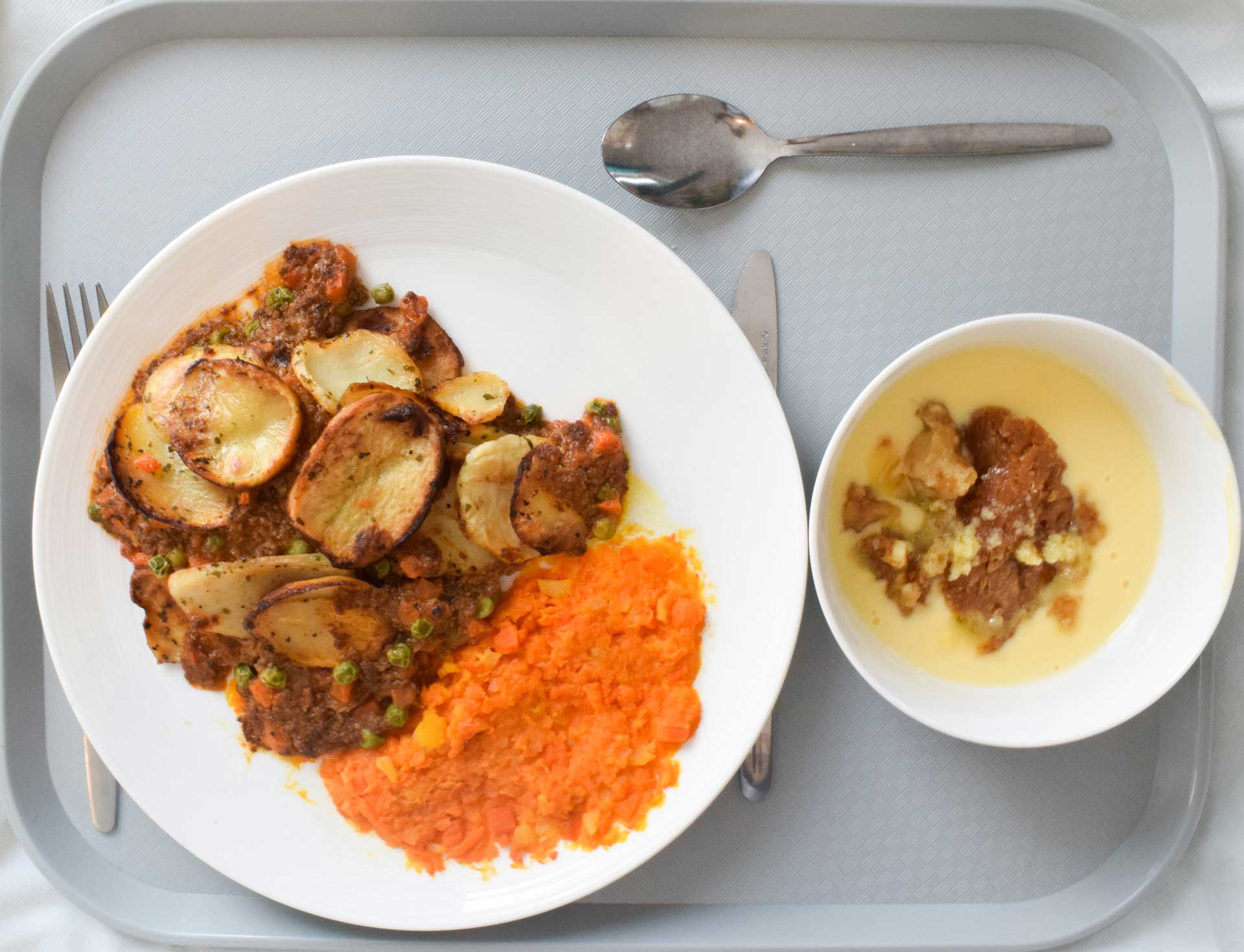
A typical 1960s school dinner menu in the UK was based on simple dishes. It reflected both cost pressures and the lingering influence of post-war food culture. Mains were often hearty and filling, yet cheap to produce. Dishes such as lamb hotpot, cottage pie, minced beef, corned beef hash, or fish-based options like fish cakes and fish pie were regulars. These were usually served with heavily cooked root vegetables that were available all year round, like swede, carrots, cabbage, peas or turnip. And let's not forget lashings of lumpy mashed potato! Presentation mattered far less, too.
Custard was an important feature of each and every dessert. Spotted Dick, sponge puddings and fruit-based tarts were staples, always drenched in custard.
Main meal
Dessert
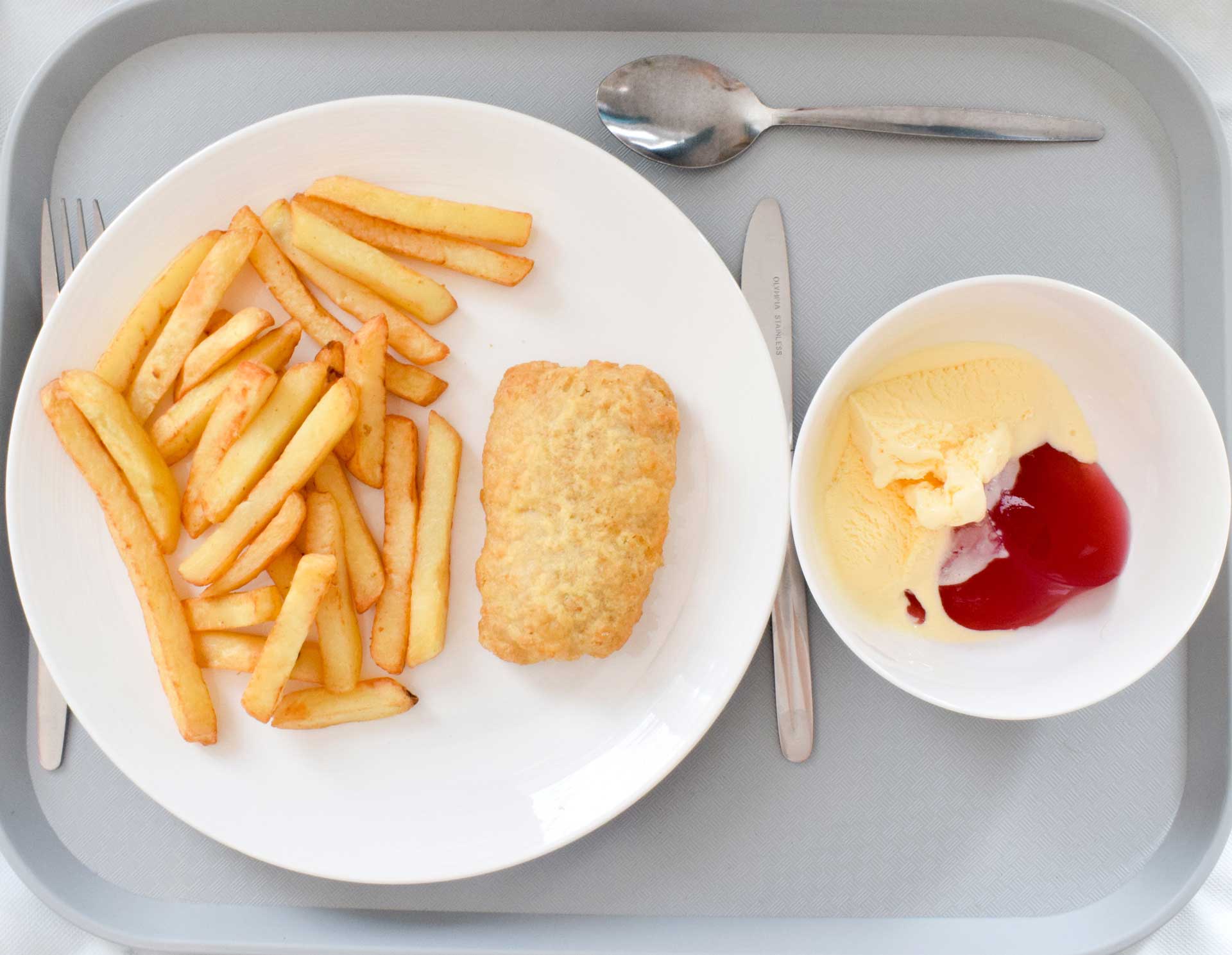
By the 1970s, British school dinner menus were beginning to show signs of wider social change. In some locations, foods that had once seemed unknown and unfamiliar like pasta dishes and curry started to creep onto menus, reflecting Britain’s changing population and increasingly global food culture. For many pupils however, school dinners were very plainly 'British' in their presentation and variety. Think traditional fish and chips, Shepherd's pie or Cottage pie. Menus were focused on meat and fish with vegetables, and potatoes still featured very heavily (either mashed, boiled or in chip form). Processed products like Spam fritters, fish cakes and tinned ingredients also reflected the growing influence of convenience foods in British cooking.
Children of the period looked forward to rich and comforting desserts like custard, sponge puddings, jelly, ice cream, crumbles and rice pudding. Dessert was often the most eagerly anticipated part of lunch due to its sweetness!
Main meal
Dessert
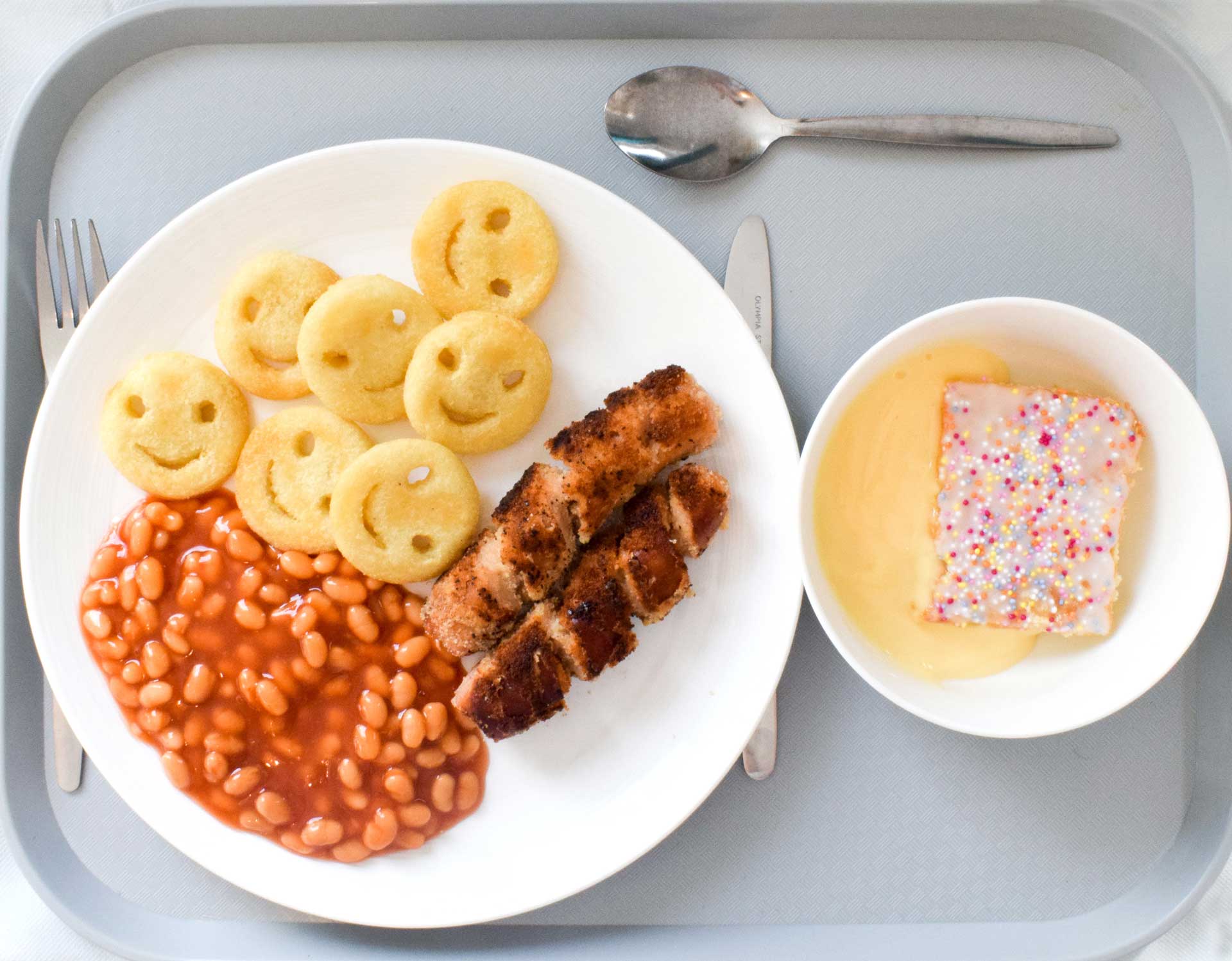
School dinners from the 80s had questionable nutritious value at times, as more convenience, quick-to-serve, frozen and processed foods became mainstream and slipped into school canteen menus. Think the famous deep fried turkey twizzlers, smiley faces and beans. In some cases, it would be rare to find anything green on the dinner plate aside from a dollop of mushy peas served with fish and chips! Shepherd's or cottage pie still made the rounds, and desserts like sponge cake, jam roly poly and custard were continued favourites. The 80s school dinner menu highlighted tighter school budgets and wider changes happening in British homes, where frozen foods, supermarkets and convenience cooking were becoming part of everyday life.
Earlier traditions of sitting in fixed groups and being served at tables gradually gave way to cafeteria-style queues and greater choices, with children asked what they'd prefer out of two or three options when it came to mains and sides.
Main meal
Dessert
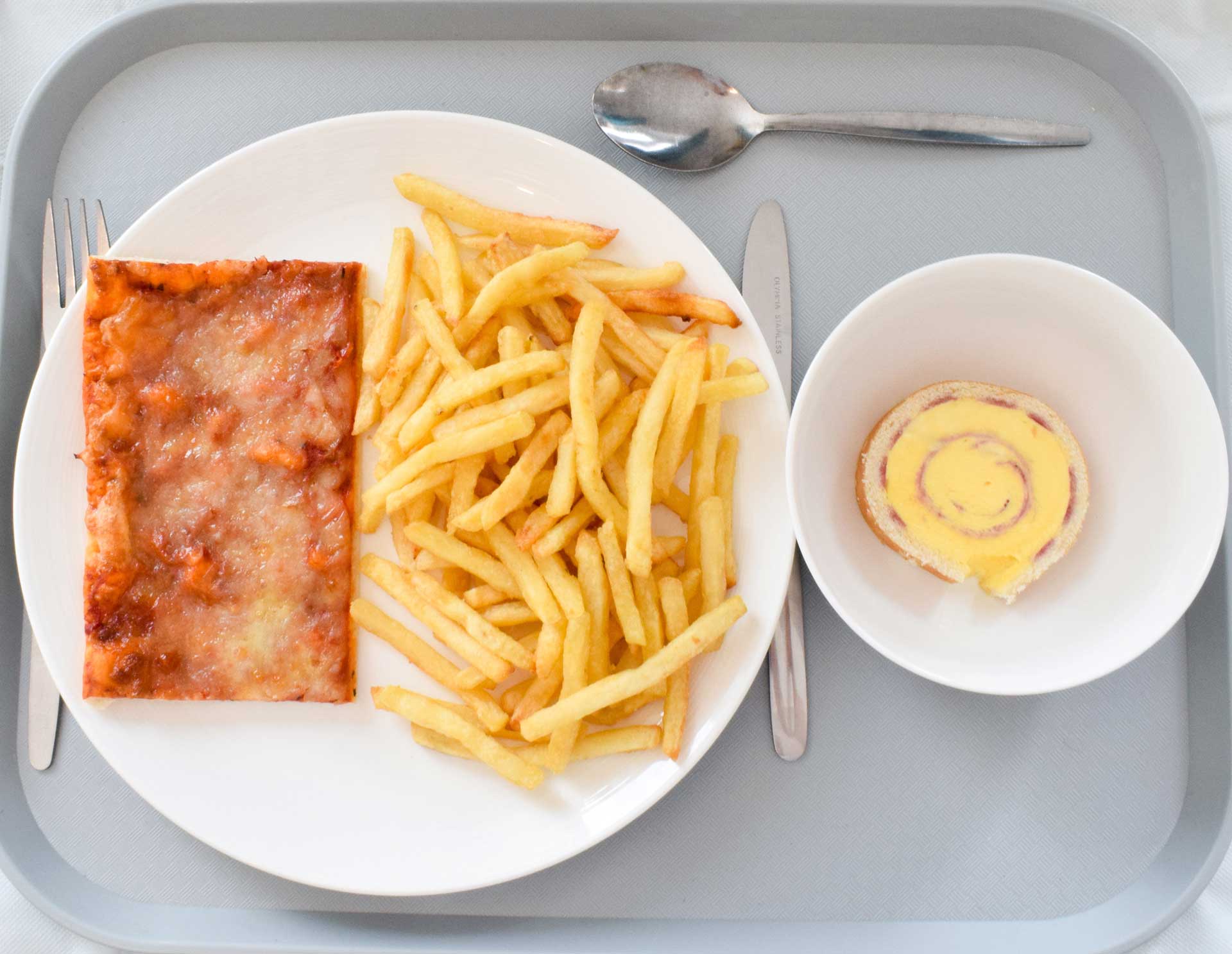
By the 1990s, British school dinners had really changed from the post war-time era and the traditional 'meat, vegetable side and custard-based pudding' model of earlier decades.
Various social changes were happening at the time. There was tighter public spending, outsourced catering contracts and the growing influence of convenience food and consumer choice in supermarkets and homes. Menus became more about fast-food culture – think rectangular pizza, lots of chips, pasta bakes, burgers, fish fingers and processed potato products. These types of convenience and overly processed foods appeared far more regularly than the stews, pies and hotpots of previous generations. Nutritional standards had been reduced in earlier reforms, and schools were increasingly expected to deliver meals cheaply while attracting pupils who now had the alternative of bringing packed lunches.
Lunchtime culture in the 90s was about schoolchildren queuing with friends and choosing their favourite dishes before they ran out. Famous desserts of the time included arctic roll and a tray bake sponge topped with icing and rainbow sprinkles, often known as 'school cake' or 'sprinkle cake'.
Main meal
Dessert
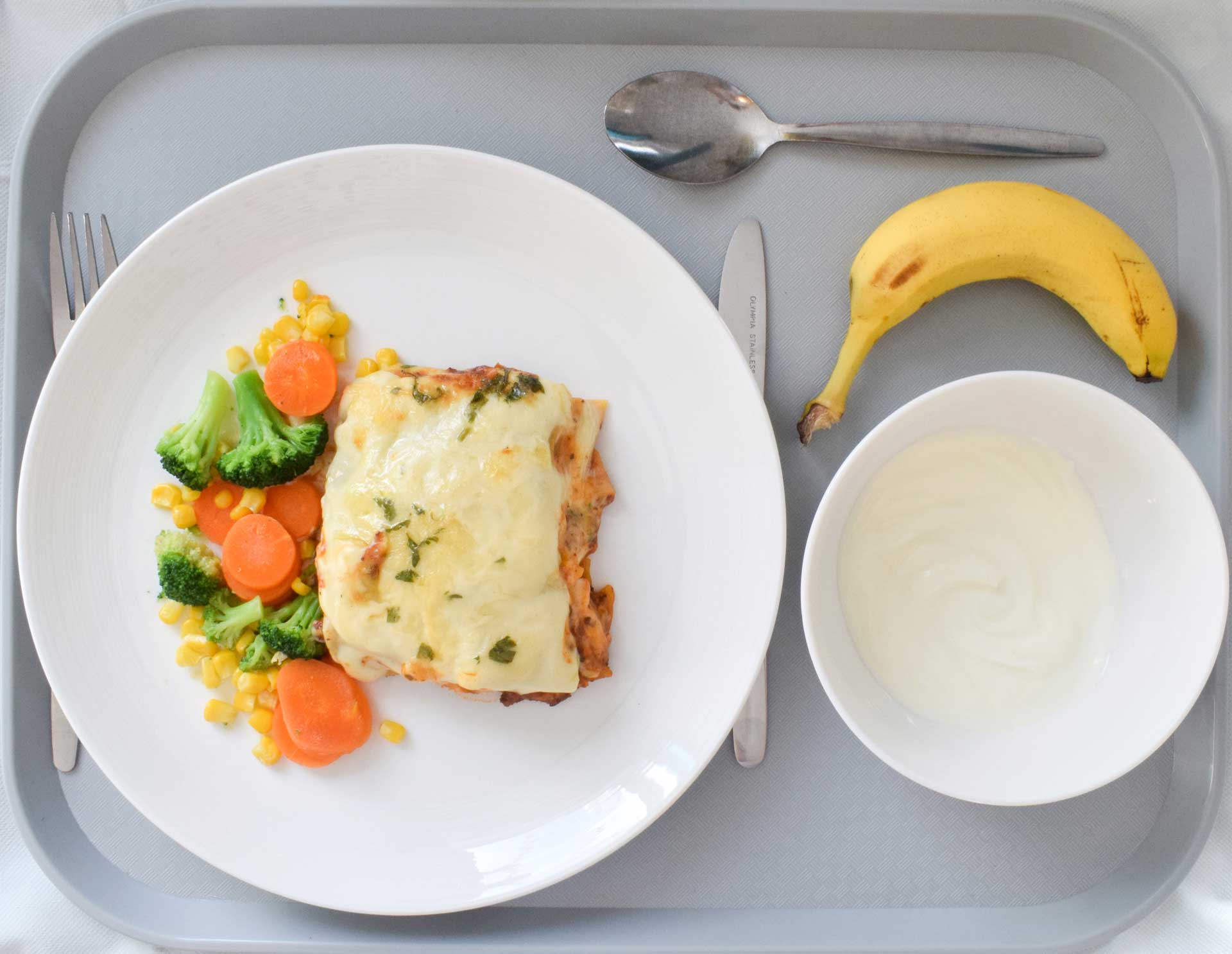
School dinners in the 2000s had a major shake-up and became the centre of a national and cultural debate as a result of Jamie Oliver's 2005 television series Jamie’s School Dinners. The series exposed the reality of many school menus in England: highly processed foods, limited fresh ingredients and meals that lacked vital nutrition. Foods such as Turkey Twizzlers, chips, burgers, pizza and sugary desserts became symbols of what critics saw as a wider problem in children’s diets.
The programme triggered the Feed Me Better campaign and helped push school food into mainstream political discussion. This led to more money being put into school dinners to improve nutritional standards. Processed and overly sugary foods were replaced with pasta dishes, vegetables, bean wraps, salads and curries with fresh ingredients. Dessert options with high sugar content were replaced with healthier options like fresh fruit and yogurt.
Main meal
Desserts
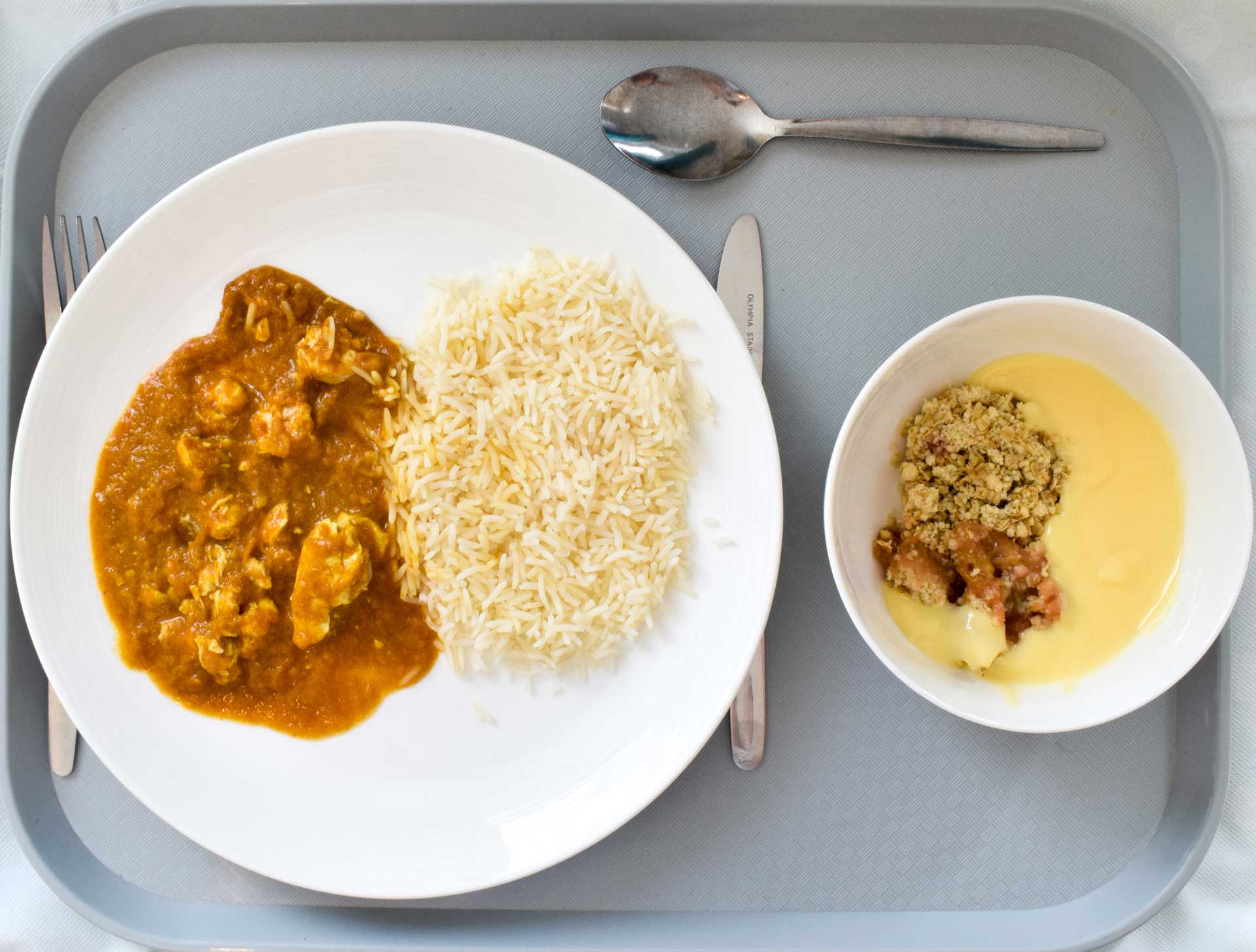
With school dinners in Britain seeing such an extensive overhaul during the 2000s, this led to far stricter rules throughout the 2010s and beyond in terms of schools providing nutritious meals for children. These rules limited the amounts of processed and overly sugary foods that schools could serve children each week. Parents with children taking packed lunches into school were given guidance on foods that were allowed. These rules continue to be enforced today. Multiple dietary requirements are also catered to, such as vegetarian options, dairy free and gluten free options. Technology also means that parents can pre-order food using an app and pay before their child goes to school.
A typical dinner menu consists of a variety of dishes such as mac and cheese, tuna pasta, lasagne, veggie burgers and curry. Potatoes, grains and rice are favoured over deep fried foods and chips. Desserts and puddings include fruit crumble, brownies, fruit and yogurt. There is a continued focus on variety and healthy options for a balanced diet.
Main meal
Dessert



