Teaching Abroad Direct
Long before ergonomic rucksacks were a thing and we all walked around with tablets and phones to keep us connected, British school bags looked very different. The humble pen and paper ruled the classroom, social media didn't exist, and reusable water bottles were not in fashion.
In this blog, we take a look at the history of British school bags over time, taking a trip down memory lane and remembering some of the playground trends, pop culture and changing technologies of each decade. From the heavy leather British school satchel of post-war Britain in the 1950s, to the colourful 90s backpack brands. What was in yours?
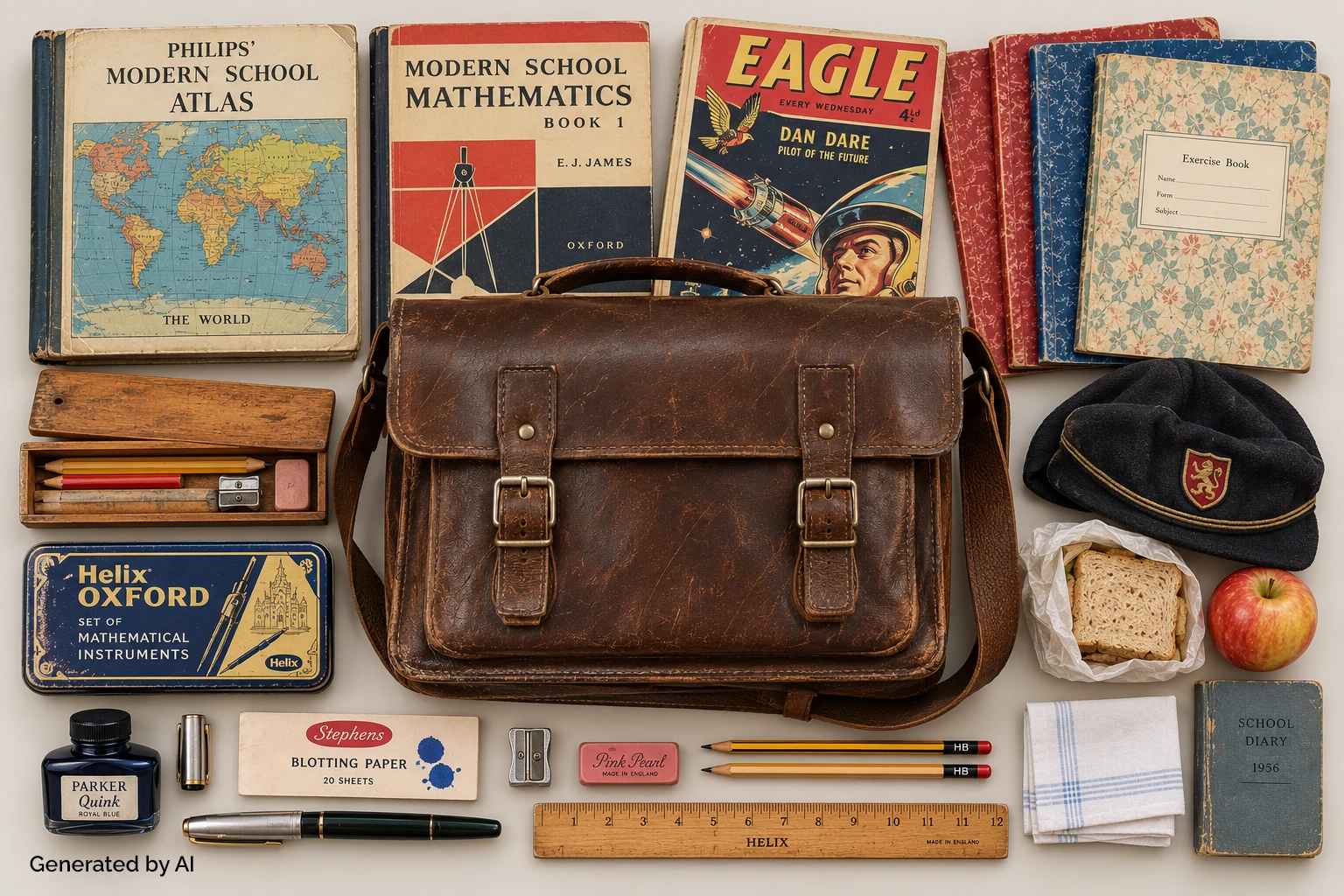
School bags in the 50s were all about durability and making things last in a post-war Britain. School kids of the era were most likely to carry a brown leather satchel as it was heavy-duty and designed to last in all weathers while surviving playground scuffs.
Inside, stationery was built to last rather than be thrown away as single-use plastics. Many teachers believed that ballpoint pens caused sloppy handwriting, so pupils relied on a proper fountain pen, a glass bottle of Parker Quink ink and a packet of Stephens blotting paper to mop up inevitable smudges. Bags were weighed down by hardback editions, and you could forget fancy pencil cases because all you had was a sliding wooden pencil box, a classic 12-inch wooden Helix ruler (doubling as a makeshift sword at breaktime), a Pink Pearl eraser and the iconic blue Helix Oxford instruments tin complete with compass and protractor. Lunch was a simple affair with just a sandwich wrapped in greaseproof paper and an apple.
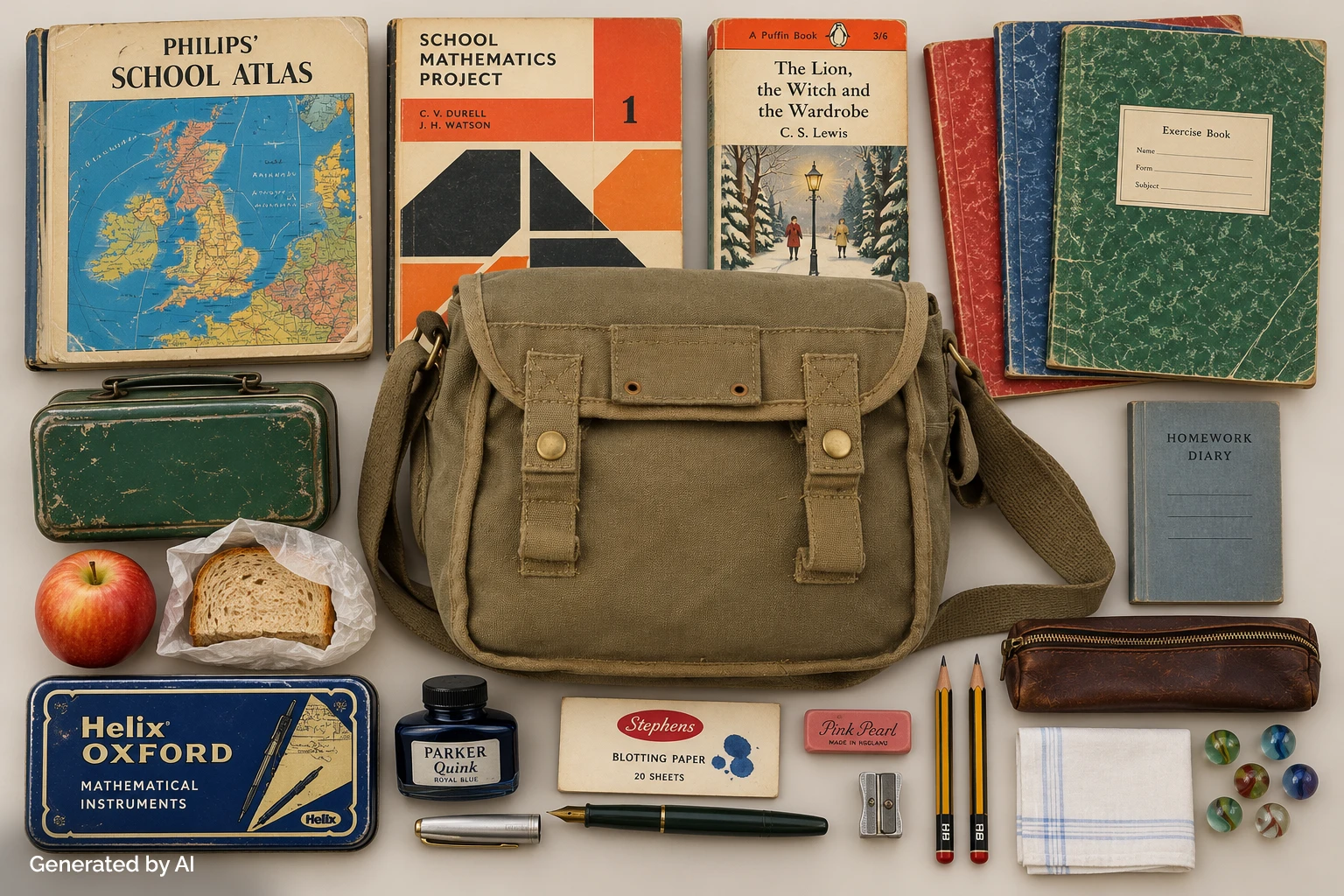
School bags in the 1960s began to loosen up, with canvas satchels making their way onto the scene instead of stiff formal leather. These were easier for children to carry as they were lighter, more flexible and slightly more casual. These bags were tough enough to survive being slung over a bike handlebar.
Inside the school bag, many classroom staples stayed from the previous decade, with fountain pens, Parker Quink ink, blotting paper and a Helix Oxford maths tin still making daily appearances. That said, zipped leather pencil cases were slowly creeping into fashion as the UK followed US trends. Modern pencil cases were introduced to the market by American stationery expert Verona Pearl Amoth in around 1946. By the 60s, they were in the UK. Soft-bound textbooks and paperbacks were also more common than hardback.
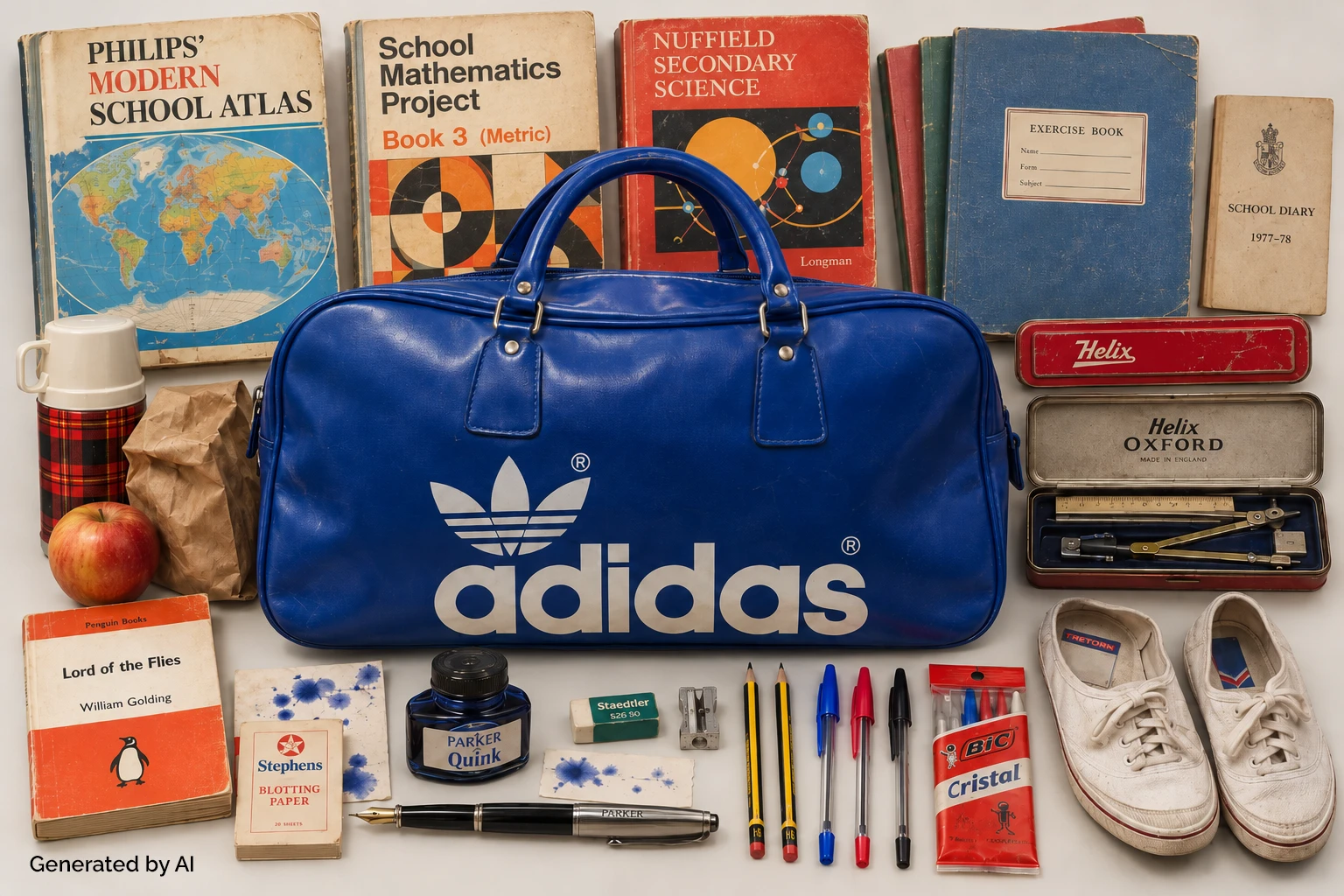
In the 1970s, having an iconic vinyl Adidas holdall (with the newly launched Trefoil logo) was the ultimate status symbol as sportswear crossed over into everyday fashion. Fun fact: the bags were actually manufactured in the UK under licence by Peter Blacks in Yorkshire.
Inside, things were becoming more modern inside the classroom. While some kids still used Parker fountain pens and blotting paper, by the end of the decade, disposable Bic Cristal ballpoints were finally challenging traditional writing tools. Maths textbooks had also officially gone metric. Kids of the era would often carry a pair of white plimsolls for PE, and lunch was still packed in a brown paper bag.
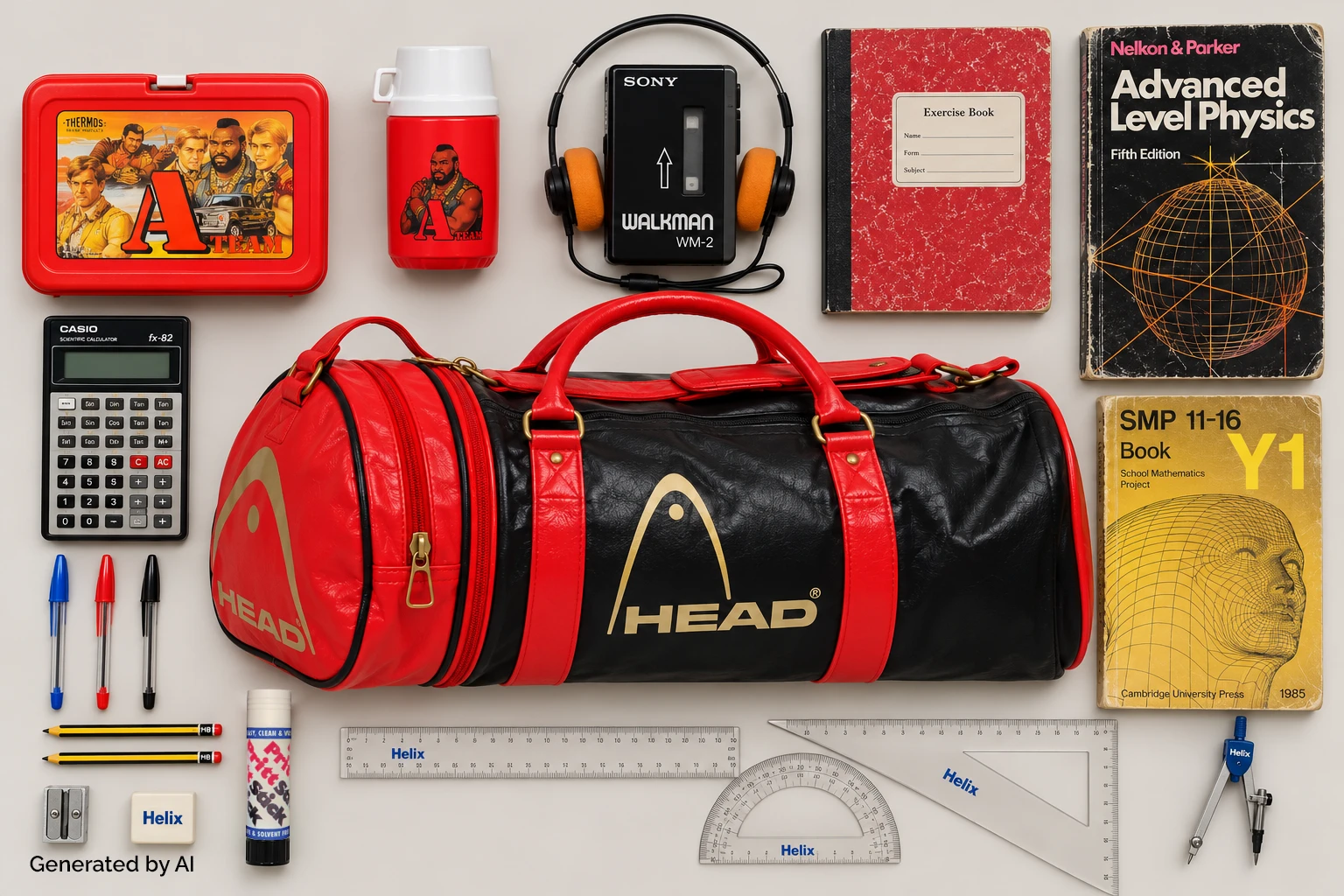
School bags in the 80s really continued the sportswear fashion craze. It wasn't uncommon to see a brightly-coloured faux-leather HEAD barrel holdall ruling British playgrounds. If you wanted to look cool, you adjusted the shoulder strap to its absolute longest setting so the cylindrical bag bounced awkwardly against your knees as you walked. (Not sure if we'd rock this look nowadays!)
Fountain pens had largely been replaced by Bic biros at this point, and a trusty Pritt Stick was often an arts and crafts sidekick. Pupils needed a trusty Casio scientific calculator for maths lessons, along with clear plastic Helix geometry sets. Packed lunches had a complete makeover in this era, and it was all about novelty and themed lunch boxes and matching flasks. If you had a Sony Walkman with foam headphones tucked next to your physics textbook, you had instant entertainment on your trip home from school.
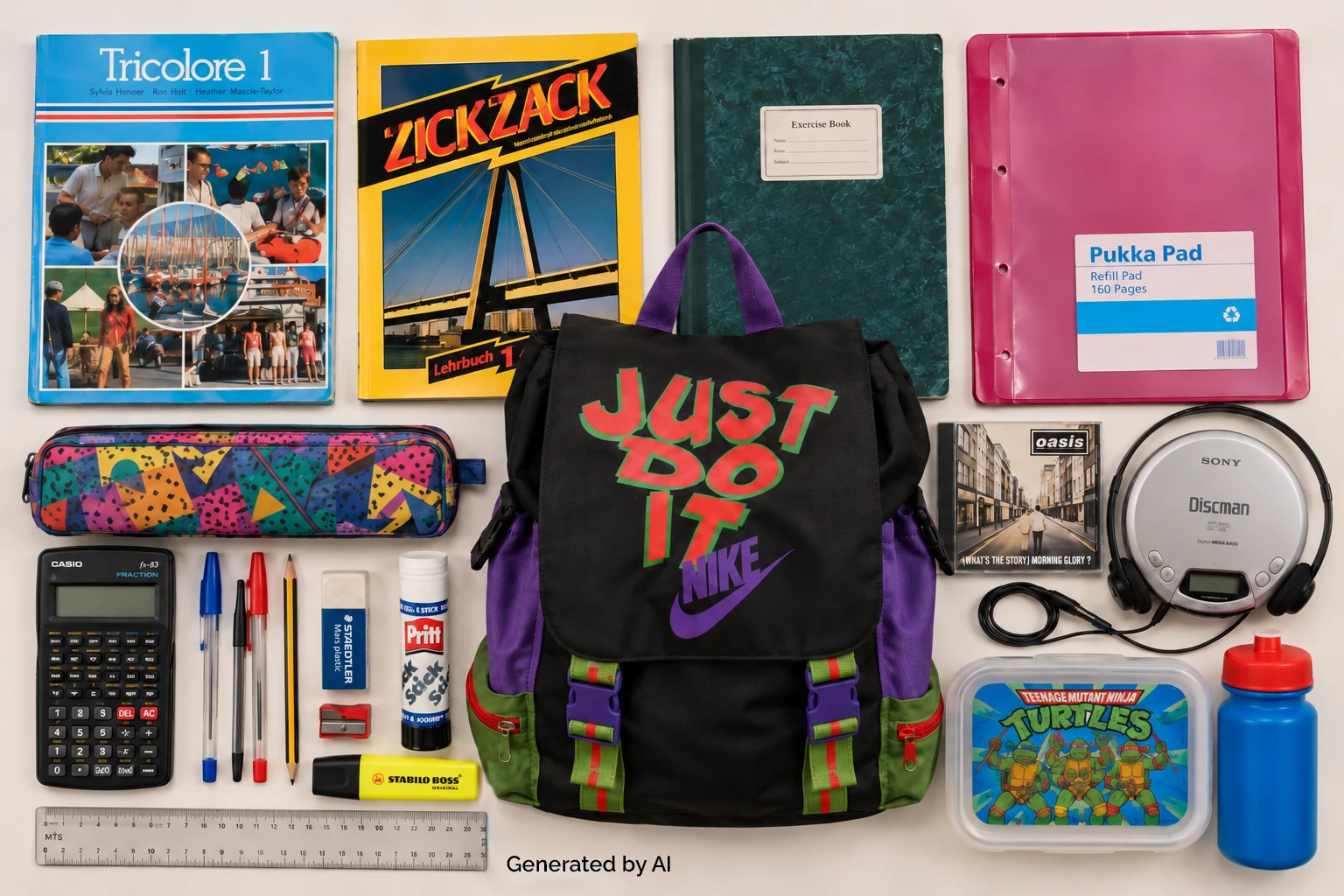
Fashionable school bags in the 90s were all about the colourful rucksack (move over, sports holdall!). Backpacks were all about colour-blocked styles, but brands like Nike, Adidas and Reebok still dominated the school gates. If you were a cool kid, your backpack was strictly worn slung over one shoulder, with a digital Tamagotchi clipped to the strap.
Inside, stationery was bright and colourful, with bold and unique soft pencil cases, neon Stabilo Boss highlighters and vivid Pukka Pads for making notes. Foreign languages were often taught as part of curricula, with students being made to carry well-worn copies of Tricolore and Zickzack for their course work. Lunchtimes belonged to Teenage Mutant Ninja Turtles sandwich boxes, and on the bus home kids would have to lug around a bulky Sony Discman and a bunch of CDs if they ever wanted to change their Britpop soundtrack (holding it steady enough not to skip tracks!).
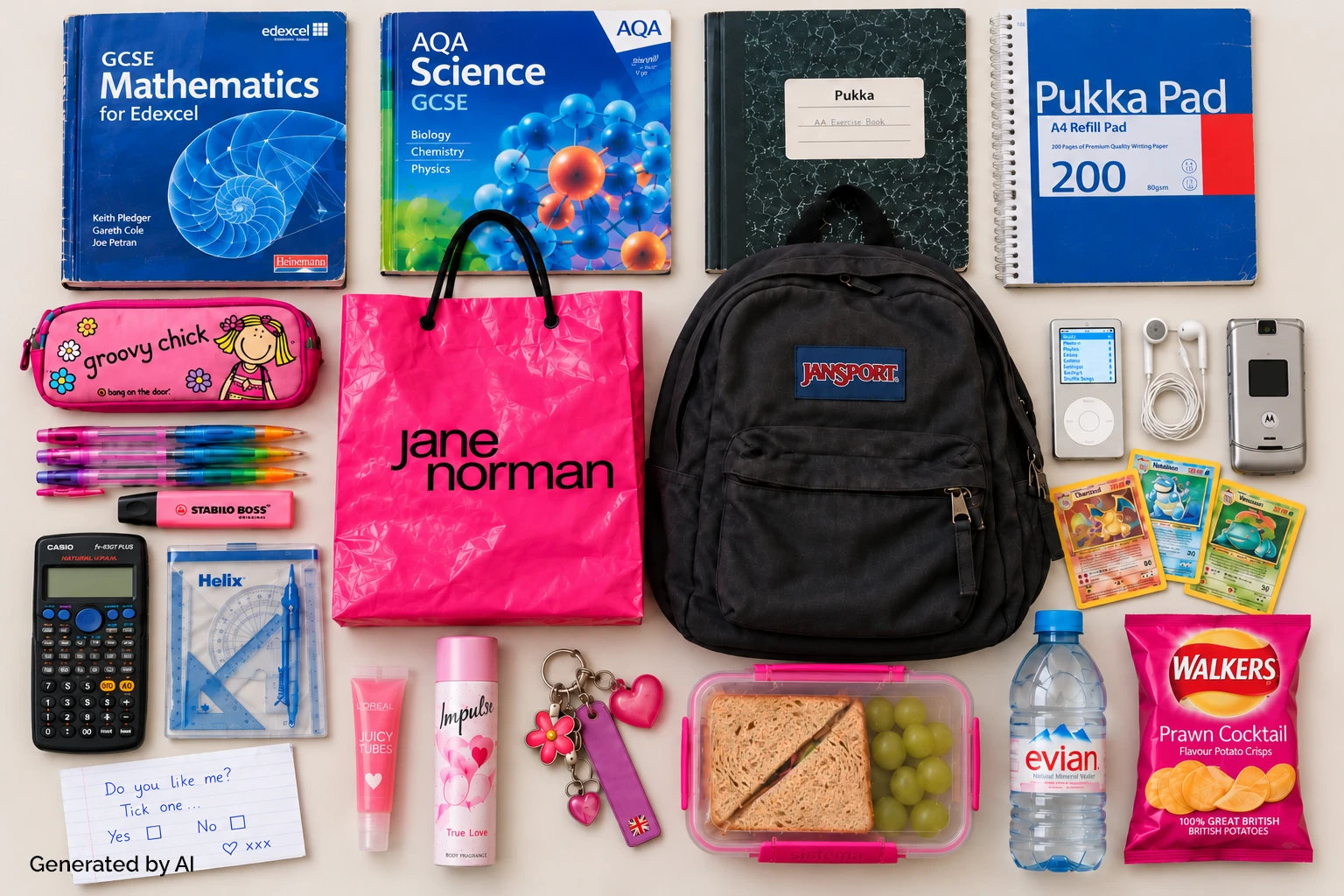
Y2K style meant that your bag was often the focal point of your outfit. But when it came to backpacks in 2000s Britain, plain black was the go-to colour for many. JanSport backpacks becoming the ultimate understated classic (unless you were carrying your PE kit in a bright pink plastic Jane Norman carrier bag). Zips were heavily customised with chunky keyrings, and wearing your rucksack slung low off both straps was practically a uniform requirement.
If you took a look inside school bags in the 2000s, it was clear that portable digital tech had started to creep into everyday life. Alongside Edexcel and AQA GCSE textbooks and Pukka Pads, you'd find first-generation iPods and Motorola flip phones with cameras. Who remembers bright Groovy Chick pencil cases stuffed with multi-coloured (and even scented) gel pens? Then there were the prized Pokémon cards. Essential beauty touch-ups from your locker came courtesy of Impulse body spray and sticky L'Oréal Juicy Tubes, while lunch meant a clip-lock Sistema box, a bottle of Evian, and a packet of Prawn Cocktail Walkers crisps.
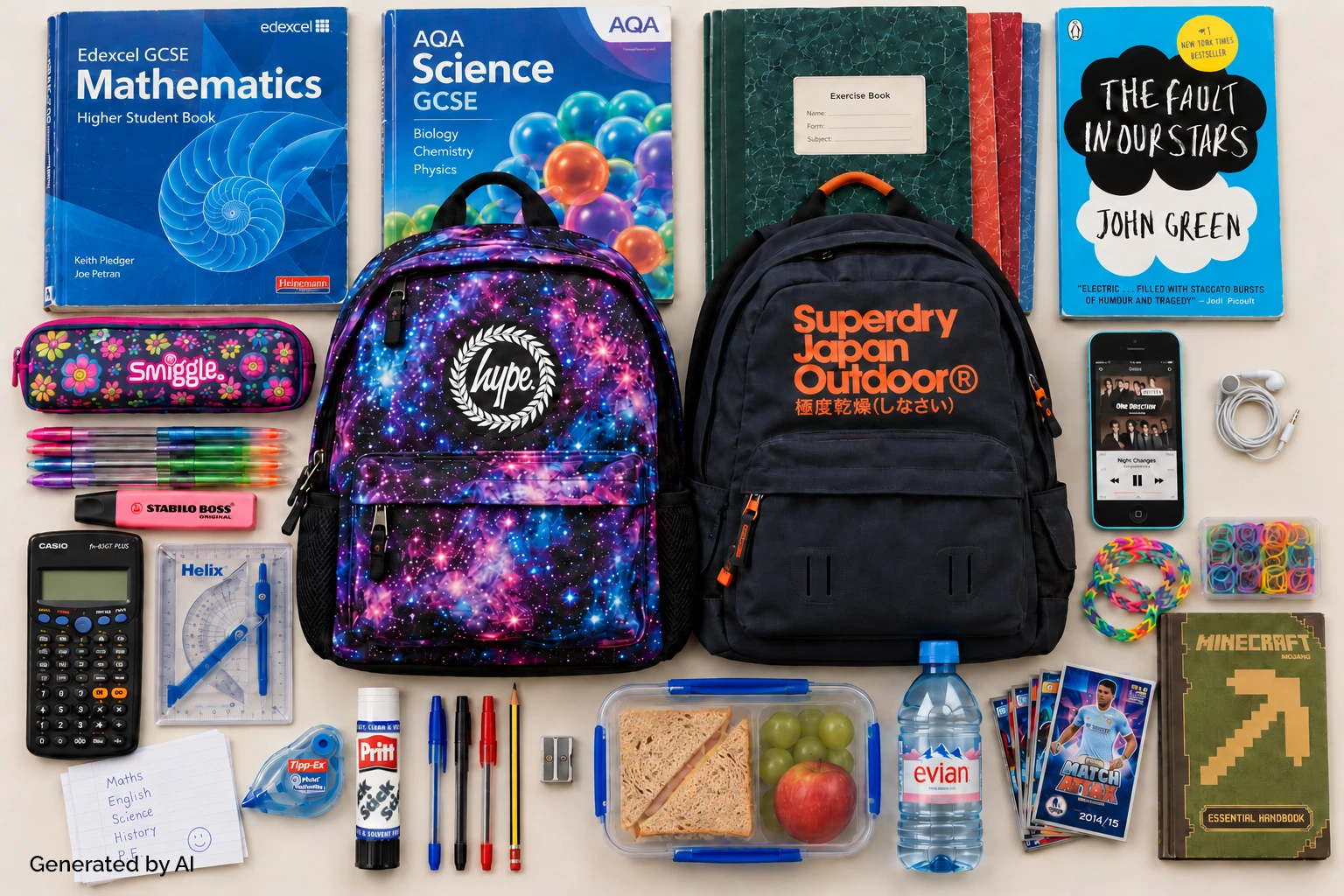
In the 2010s, you were in one of two major British school backpack camps in the playground... a bold, all-over galaxy-print Hype bag, or a more understated Superdry rucksack. Straps were finally worn properly on both shoulders again, and bags were designed for students to be able to lug heavier books and everyday tech.
Stationery got more colourful and creative than ever with Smiggle pencil cases, Tipp-Ex correction mice were a staple, and trusty Stabilo highlighters had expanded into more colour choices (with pastels now an option). Tucked beside GCSE textbooks, MP3 players and iPods were replaced by iPhones wired to white Apple earphones, complete with streaming libraries. Break times in the playground revolved around swapping football cards, weaving neon Loom bands and consulting the Minecraft Essential Handbook.
At Teaching Abroad Direct, we help UK teachers secure jobs in international schools around the world.
Visit www.teachingabroaddirect.co.uk to learn more about teaching opportunities overseas.
Teaching Abroad Direct regularly speaks with British teachers currently working overseas.
Journalists interested in speaking with teachers currently working in other countries can contact us via [email protected]



